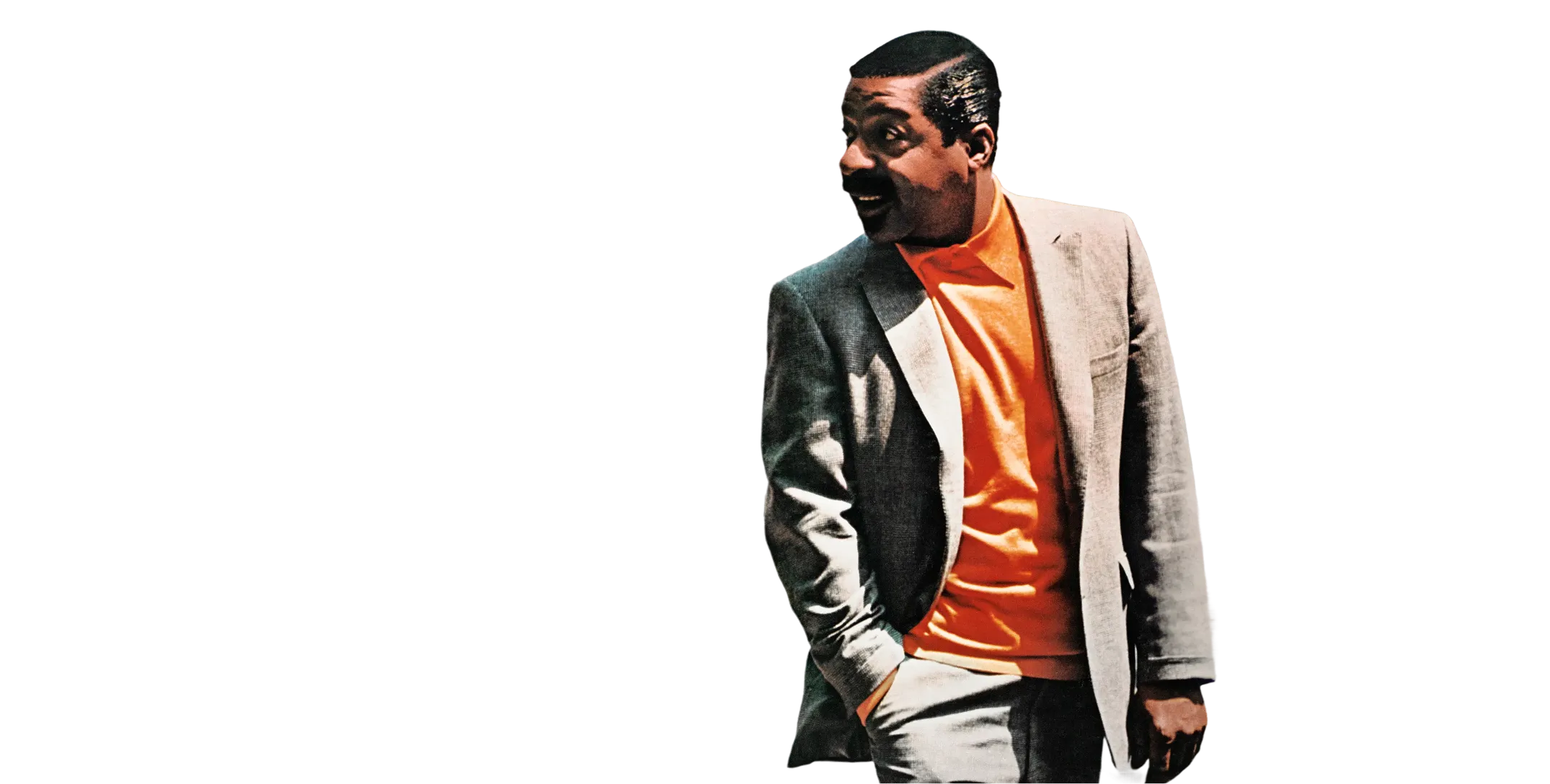



Erroll Garner
Feeling is Believing
Recorded at the tail end of 1969 with a cast of talented new collaborators, this album is a prime showcase of Erroll Garner’s two greatest strengths: His ability to completely reinvent well known songs, and his endlessly creative facility as a composer of original music. From his sultry “Loving Touch” to the Afrofuturistic “Mood Island”, Garner’s originality again proves boundless.


Buy the Album
This is the album in its truest form. Buy once, listen deeply, and support the work behind the sound.


About the Album
Credits
Piano Erroll Garner Bass George Duvivier (1–3, 5–11), Gerald Jemmott (4) Drums JimmieSmith (4), Joe Cocuzzo (5, 7–9) Charles Persip (1–3, 6, 10–11) Conga José Mangual Recorded Aug 8, Oct 7, Dec 2, 1969 by John Cue at Capitol Studios, NYC Original Album Producer Martha Glaser Cover Design Richard Germinaro Cover Photo Vernon Smith Original Liner Notes Martha Glaser Octave Remastered Series Feeling Is Believing Senior Producer Peter Lockhart Producer Steve Rosenthal Sound Restoration Jamie Howarth, Plangent Processes Analog Tape Transfer John K. Chester Mastering Michael Graves Art Direction, Design White Bicycle
Piano Erroll Garner Bass George Duvivier (1–3, 5–11), Gerald Jemmott (4) Drums JimmieSmith (4), Joe Cocuzzo (5, 7–9) Charles Persip (1–3, 6, 10–11) Conga José Mangual Recorded Aug 8, Oct 7, Dec 2, 1969 by John Cue at Capitol Studios, NYC Original Album Producer Martha Glaser Cover Design Richard Germinaro Cover Photo Vernon Smith Original Liner Notes Martha Glaser Octave Remastered Series Feeling Is Believing Senior Producer Peter Lockhart Producer Steve Rosenthal Sound Restoration Jamie Howarth, Plangent Processes Analog Tape Transfer John K. Chester Mastering Michael Graves Art Direction, Design White Bicycle
Liner Notes
This is Erroll Garner's first album release of the 70's. Once again, he demonstrates that he is totally unique, ever fresh, and ever creative. The most dominant style influence in contemporary piano, Garner performances have inspired many descriptions from critics including-“elfin, pixie, puckish, a smiling hip Buddah, Chaplinesque, the Debussy of jazz, and the Picasso of the piano."
An English critic has discussed the “profundity of joy” as expressed by Garner's work, and called him “the last of the rugged individualists in jazz." Writer Leonard Feather describes Garner as "both contemporary and avant-garde at all times.”
Garner's performances are totally improvised and express the inner-man. In an era of self-conscious attempts to communicate more fully by encounter methods, touch, vibrations, Garner always has expressed himself fully, naturally, and without inhibitions. His usual directive to his accompanists, who have to be tuned to him, and his ranging improvisations by sound, sight, mood, instinct, and perhaps even ESP, is “play whatever you feel.”
Garner performances evoke excited comments from critics: “Garner, whose piano playing is like no one else's ... though he has plenty of imitators, set the crowd on his ear.” (Concord, Calif.). Bernard Vadon, French critic, of Garner at the Antibes Festival: “Garner lifts us to another summit of jazz music, in which Garner 'talks' with his keyboard, and his musicians and audience with his music. This is a dazzling recital ... a master in the art of improvisation, Garner at an opportune moment, recovers the theme following his inimitable introduction ... which gives such joy. His is an indisputable musical experience, as astonishing as the inspiration of youth. A large smile illuminates his curious and sympathetic face, rolling mischievous eyes, endearing two hands to his piano like a jockey pleased with his mount, Erroll Garner abducts his audience and leads them away to the very heart of his music.”
In an era which is marked by many derivative, hybrid, eclectic musicians and music and outright imitators and copies, Garner continues to be completely individual, innovative, original, and his own man. He has been called the perpetual renaissance man. This album, which introduces five Garner compositions, is a highlight of his illustrious gallery of recorded works.
ACCOMPANIMENT Several top rhythm players were used during the six sessions from which this album was produced. The rhythm accents, which are very much in keeping with today's sound, project a conception different from those used on Garner's previous works.
On You Turned Me Around, Fender bassist Gerald Jemmott joined Garner and his regular conga player, Jose Mangual, plus Jimmie Smith on drums.
On all the other selections, bassist George Duvivier and Jose Mangual performed with Garner.
On Strangers In The Night, Feeling Is Believing, Mood Island, and The Loving Touch, Joe Cocuzzo is the drummer. On For Once In My Life, Yesterday, Spinning Wheel, The Look Of Love, and Paisley Eyes, Charles Persip is on drums.
This is Erroll Garner's first album release of the 70's. Once again, he demonstrates that he is totally unique, ever fresh, and ever creative. The most dominant style influence in contemporary piano, Garner performances have inspired many descriptions from critics including-“elfin, pixie, puckish, a smiling hip Buddah, Chaplinesque, the Debussy of jazz, and the Picasso of the piano."
An English critic has discussed the “profundity of joy” as expressed by Garner's work, and called him “the last of the rugged individualists in jazz." Writer Leonard Feather describes Garner as "both contemporary and avant-garde at all times.”
Garner's performances are totally improvised and express the inner-man. In an era of self-conscious attempts to communicate more fully by encounter methods, touch, vibrations, Garner always has expressed himself fully, naturally, and without inhibitions. His usual directive to his accompanists, who have to be tuned to him, and his ranging improvisations by sound, sight, mood, instinct, and perhaps even ESP, is “play whatever you feel.”
Garner performances evoke excited comments from critics: “Garner, whose piano playing is like no one else's ... though he has plenty of imitators, set the crowd on his ear.” (Concord, Calif.). Bernard Vadon, French critic, of Garner at the Antibes Festival: “Garner lifts us to another summit of jazz music, in which Garner 'talks' with his keyboard, and his musicians and audience with his music. This is a dazzling recital ... a master in the art of improvisation, Garner at an opportune moment, recovers the theme following his inimitable introduction ... which gives such joy. His is an indisputable musical experience, as astonishing as the inspiration of youth. A large smile illuminates his curious and sympathetic face, rolling mischievous eyes, endearing two hands to his piano like a jockey pleased with his mount, Erroll Garner abducts his audience and leads them away to the very heart of his music.”
In an era which is marked by many derivative, hybrid, eclectic musicians and music and outright imitators and copies, Garner continues to be completely individual, innovative, original, and his own man. He has been called the perpetual renaissance man. This album, which introduces five Garner compositions, is a highlight of his illustrious gallery of recorded works.
ACCOMPANIMENT Several top rhythm players were used during the six sessions from which this album was produced. The rhythm accents, which are very much in keeping with today's sound, project a conception different from those used on Garner's previous works.
On You Turned Me Around, Fender bassist Gerald Jemmott joined Garner and his regular conga player, Jose Mangual, plus Jimmie Smith on drums.
On all the other selections, bassist George Duvivier and Jose Mangual performed with Garner.
On Strangers In The Night, Feeling Is Believing, Mood Island, and The Loving Touch, Joe Cocuzzo is the drummer. On For Once In My Life, Yesterday, Spinning Wheel, The Look Of Love, and Paisley Eyes, Charles Persip is on drums.
Tracklist
Companion Podcast
Nicole Mitchell is an award-winning flutist, composer, bandleader, and now the chair of Jazz Studies at the University of Pittsburgh. On this Episode, she and Dr. Kelley examine Garner’s GRAMMY nominated 1970 album, and discuss his pioneering contributions to music and culture.