



Erroll Garner
Ready Take One
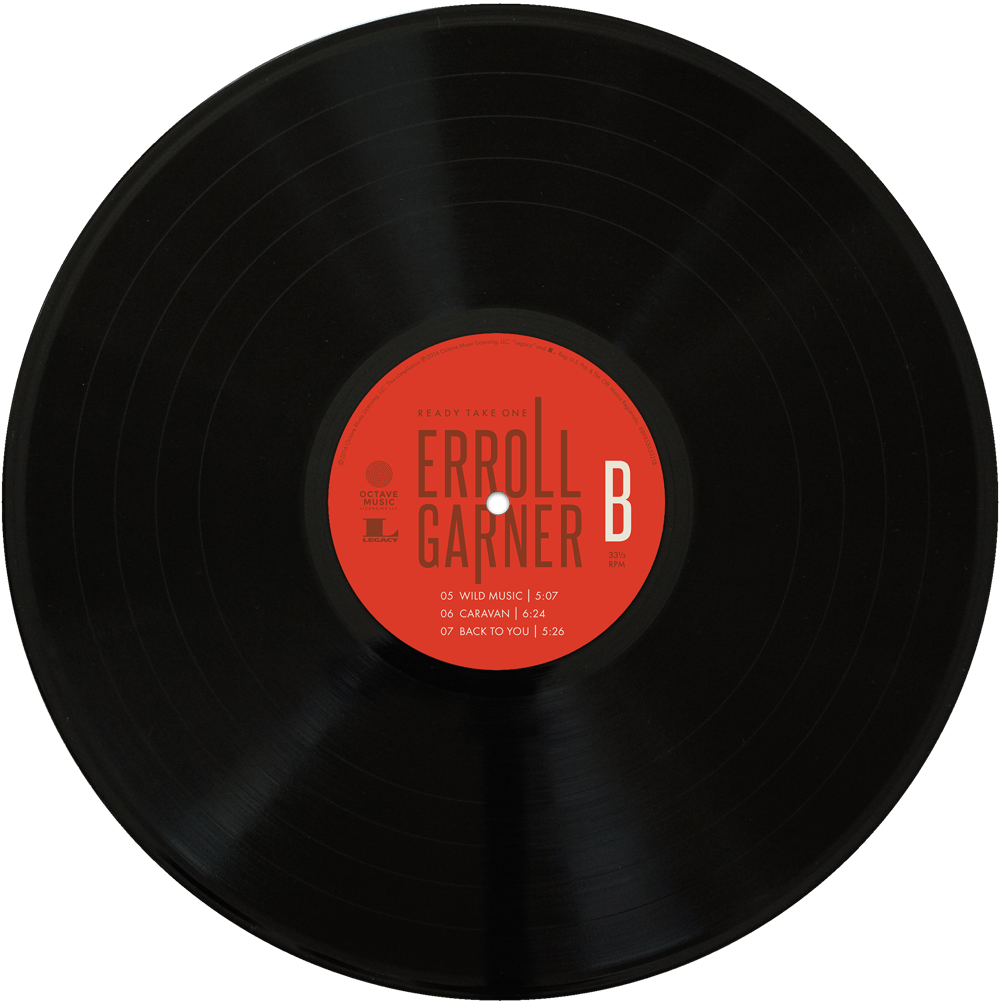
Ready Take One emerged from master session reels of Erroll Garner from 1967, 1969, and 1971, featuring adventurous and inventive playing. Martha Glaser’s phrase “Ready, take one” inspired the album’s title. Her cryptic notes guided the discovery of six new compositions, seven fresh takes on standards, and a memorable version of Misty. None of these recordings have been heard by the public before.


Buy the Album
This is the album in its truest form. Buy once, listen deeply, and support the work behind the sound.



About the Album
Credits
Piano Erroll Garner Drums Joe Cocuzzo (9), Jimmie Smith (1-8, 10-14) Bass George Duvivier (9), Larry Gales (14), Ike Isaacs (3,4,7,8,10,12,13), Ernest McCarty, Jr. (1,2,5,6,11) Conga Jose Mangual Original Recordings Engineer John Cue (9), Jerry De Clerc (3,4,7,8,10,12,13), Bob Simpson (1,2,5,6,11) Original Recordings Producer Martha Glaser Compilation producer Geri Allen, Peter Lockhart, Steve Rosenthal Assistant Producer Emma Munger Analog Tape Transfers The Magic Shop / NYC Transfer Engineers Doug Bleek, Michael Mercurio Mixed at Studio E / Brooklyn, NY Mixing Engineers Kabir Hermon, Steve Rosenthal, Peter Lockhart Mastered at Battery Mastering Studios / NYC Mastering Engineer Vic Anesini Photography Check Stewart Art Direction & Design White Bicycle
Piano Erroll Garner Drums Joe Cocuzzo (9), Jimmie Smith (1-8, 10-14) Bass George Duvivier (9), Larry Gales (14), Ike Isaacs (3,4,7,8,10,12,13), Ernest McCarty, Jr. (1,2,5,6,11) Conga Jose Mangual Original Recordings Engineer John Cue (9), Jerry De Clerc (3,4,7,8,10,12,13), Bob Simpson (1,2,5,6,11) Original Recordings Producer Martha Glaser Compilation producer Geri Allen, Peter Lockhart, Steve Rosenthal Assistant Producer Emma Munger Analog Tape Transfers The Magic Shop / NYC Transfer Engineers Doug Bleek, Michael Mercurio Mixed at Studio E / Brooklyn, NY Mixing Engineers Kabir Hermon, Steve Rosenthal, Peter Lockhart Mastered at Battery Mastering Studios / NYC Mastering Engineer Vic Anesini Photography Check Stewart Art Direction & Design White Bicycle
Liner Notes
Recorded between 12 and 16 years after the famous Concert by the Sea, recently and happily issued complete for the first time ever, these 14 wonderful selections, unveiled from Erroll Garner’s rich recorded legacy, show that he continued to mature and develop as an artist. To be sure, his unique approach to the piano was already fully formed in the earliest examples of his music, his ears were always open wide, and his nimble hands seemed to grow even stronger as the years went by and he performed for ever-growing audiences in the many forums his dedicated manager Martha Glaser opened for him.
Here, for the first time on record, we get to hear Martha’s voice as they collaborate in studio settings, and almost always it’s indeed take one that works—something not all jazz fans may know to be a true rarity.
Garner was astonishingly, perhaps even uniquely, productive in the studio, uninhibited by an environment and procedure that was not beloved by many artists —jazz, classical or what-have-you. But Erroll thrived, and certainly Martha’s presence was a contributing factor. It was that great lady, whom I got to know well, who took Garner’s career firmly in hand, and took it to the very top—Garner was, at his peak, the highest paid of jazz artists. I know of no personal manager more dedicated to a client’s welfare than Martha Glaser was to Erroll Garner’s, and this is a welcome footnote to that special relationship.
We are treated to some newly heard Garner originals: The beautiful ballad Back to You, with a misty echo in the bridge; the aptly-titled Wild Music (though Erroll, of course, is in control of the wildness); the happy, catchy Chase Me; Latin Digs, a piece that brings the special collaboration with Jose Mangual, present almost throughout, and perhaps Erroll’s most effective rhythmic supporter; the opening blues High Wire, and a more unconventional use of that seminal form, Down Wylie Avenue, expertly parsed by Robin D.G. Kelley. And to some fresh treatments of standards, some (Confessin’; Night and Day) revisited for the first time in decades. This version of the Porter classic is very different and much darker—more night than day. In contrast, I Want to Be Happy reflects its title and reminds me that Martha titled a Garner LP The Most Happy Piano. And this Caravan, a repertory overlap with Concert by the Sea, is so different from that treatment as to serve as confirmation of my opening thoughts about Erroll’s development. Erroll’s inspiration from big bands is beautifully realized by his Satin Doll, a tip of the cap to fellow Pittsburgher Billy Strayhorn, and echoing that master’s famous arrangement for Ellington. Sunny is his spirited, inventive take on a tune that became a favorite with jazz musicians at a time when that was rare, and Stella By Starlight is an interesting reconsideration of a standard Erroll had ventured more recently. Finally, we are treated to Misty, in a version from Paris that proves that its composer was able, somehow, to find something fresh to say on his most requested item, perhaps inspired by the City of Light.
Every living pianist needs to listen to this wonderful helping of new music by a man who could make a piano swing—and sing!!
Recorded between 12 and 16 years after the famous Concert by the Sea, recently and happily issued complete for the first time ever, these 14 wonderful selections, unveiled from Erroll Garner’s rich recorded legacy, show that he continued to mature and develop as an artist. To be sure, his unique approach to the piano was already fully formed in the earliest examples of his music, his ears were always open wide, and his nimble hands seemed to grow even stronger as the years went by and he performed for ever-growing audiences in the many forums his dedicated manager Martha Glaser opened for him.
Here, for the first time on record, we get to hear Martha’s voice as they collaborate in studio settings, and almost always it’s indeed take one that works—something not all jazz fans may know to be a true rarity.
Garner was astonishingly, perhaps even uniquely, productive in the studio, uninhibited by an environment and procedure that was not beloved by many artists —jazz, classical or what-have-you. But Erroll thrived, and certainly Martha’s presence was a contributing factor. It was that great lady, whom I got to know well, who took Garner’s career firmly in hand, and took it to the very top—Garner was, at his peak, the highest paid of jazz artists. I know of no personal manager more dedicated to a client’s welfare than Martha Glaser was to Erroll Garner’s, and this is a welcome footnote to that special relationship.
We are treated to some newly heard Garner originals: The beautiful ballad Back to You, with a misty echo in the bridge; the aptly-titled Wild Music (though Erroll, of course, is in control of the wildness); the happy, catchy Chase Me; Latin Digs, a piece that brings the special collaboration with Jose Mangual, present almost throughout, and perhaps Erroll’s most effective rhythmic supporter; the opening blues High Wire, and a more unconventional use of that seminal form, Down Wylie Avenue, expertly parsed by Robin D.G. Kelley. And to some fresh treatments of standards, some (Confessin’; Night and Day) revisited for the first time in decades. This version of the Porter classic is very different and much darker—more night than day. In contrast, I Want to Be Happy reflects its title and reminds me that Martha titled a Garner LP The Most Happy Piano. And this Caravan, a repertory overlap with Concert by the Sea, is so different from that treatment as to serve as confirmation of my opening thoughts about Erroll’s development. Erroll’s inspiration from big bands is beautifully realized by his Satin Doll, a tip of the cap to fellow Pittsburgher Billy Strayhorn, and echoing that master’s famous arrangement for Ellington. Sunny is his spirited, inventive take on a tune that became a favorite with jazz musicians at a time when that was rare, and Stella By Starlight is an interesting reconsideration of a standard Erroll had ventured more recently. Finally, we are treated to Misty, in a version from Paris that proves that its composer was able, somehow, to find something fresh to say on his most requested item, perhaps inspired by the City of Light.
Every living pianist needs to listen to this wonderful helping of new music by a man who could make a piano swing—and sing!!