


Erroll Garner
Symphony Hall Concert
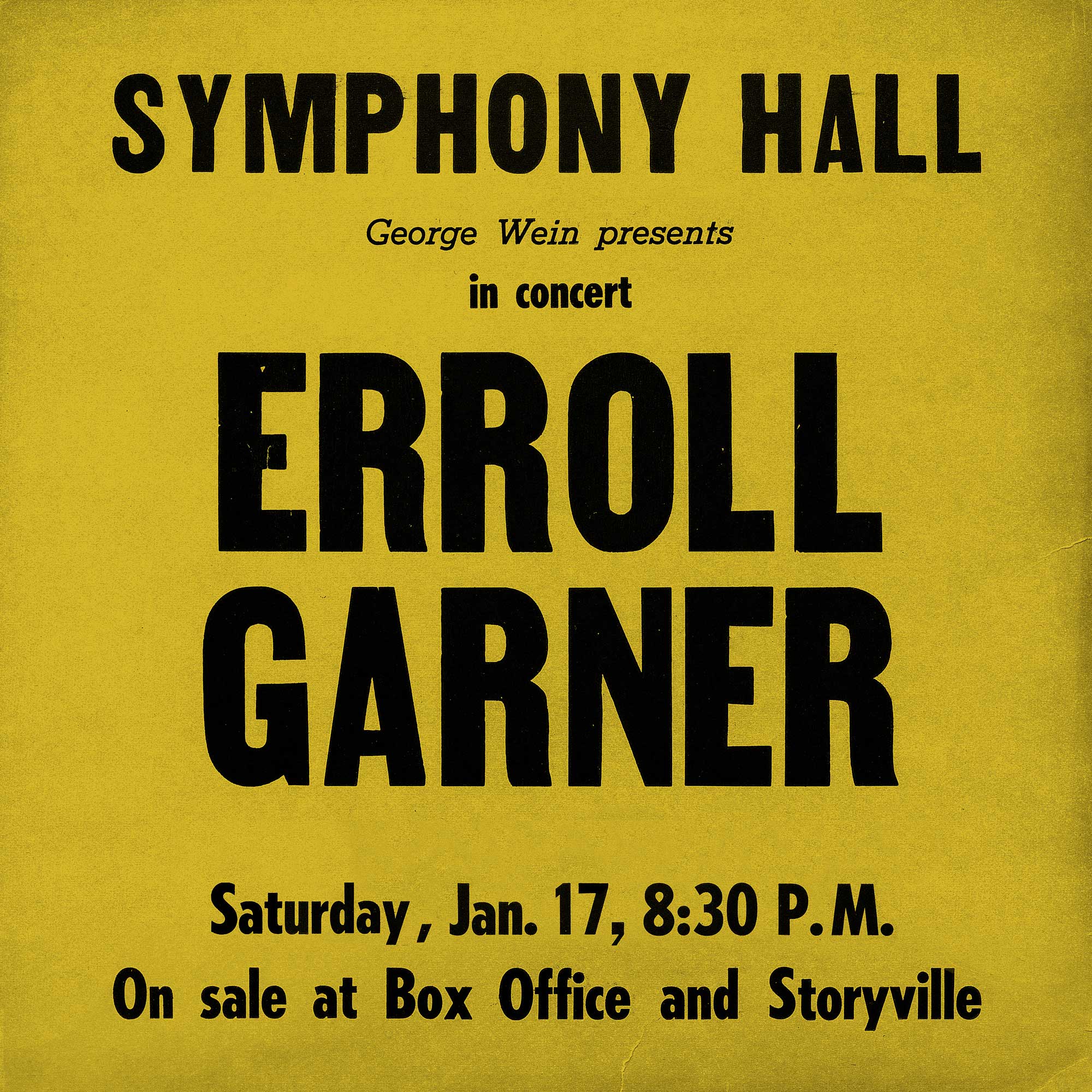
On January 17, 1959, jazz immortal Erroll Garner took the stage of Boston’s Symphony Hall for a historic performance to a sold-out crowd. Recorded 11 months prior to the Dreamstreet sessions, which heralded Garner’s return after a lengthy battle for control over his catalog, Symphony Hall Concert is a previously unreleased compilation capturing the unparalleled genius of Garner’s live performances at the beginning of one of the most defining years of his life.

Buy the Album
This is the album in its truest form. Buy once, listen deeply, and support the work behind the sound.


About the Album
Credits
Piano Erroll Garner Bass Eddie Calhoun Drums Kelly Martin Senior Producer Peter Lockhart Producer Steve Rosenthal Sound Restoration Jamie Howarth, Plangent Processes Analog Tape Transfer John K. Chester Mastering Jessica Thompson Art Direction & Design White Bicycle Photograph Ted Williams, Erroll Garner Archive
Piano Erroll Garner Bass Eddie Calhoun Drums Kelly Martin Senior Producer Peter Lockhart Producer Steve Rosenthal Sound Restoration Jamie Howarth, Plangent Processes Analog Tape Transfer John K. Chester Mastering Jessica Thompson Art Direction & Design White Bicycle Photograph Ted Williams, Erroll Garner Archive
Liner Notes
It is impossible to reflect upon Erroll Garner (or tell any other jazz story) without contextualizing his music. 1959, when this historic performance took place, marked the end of an era and offered a glimpse of what was to come—one of the most transformative decades in American history. Listening to these recordings, I’ve tried to go back in time to imagine attending this performance on a cold evening in Boston, January 17, 1959. While we have no way of truly knowing the vibe of the room other than by the audience's reaction and what can be discovered from concert reviews, one thing I am certain of is that the people in Symphony Hall did not miss the Boston Pops that evening due to Garner’s unique ability to encapsulate an entire orchestra with just two hands.
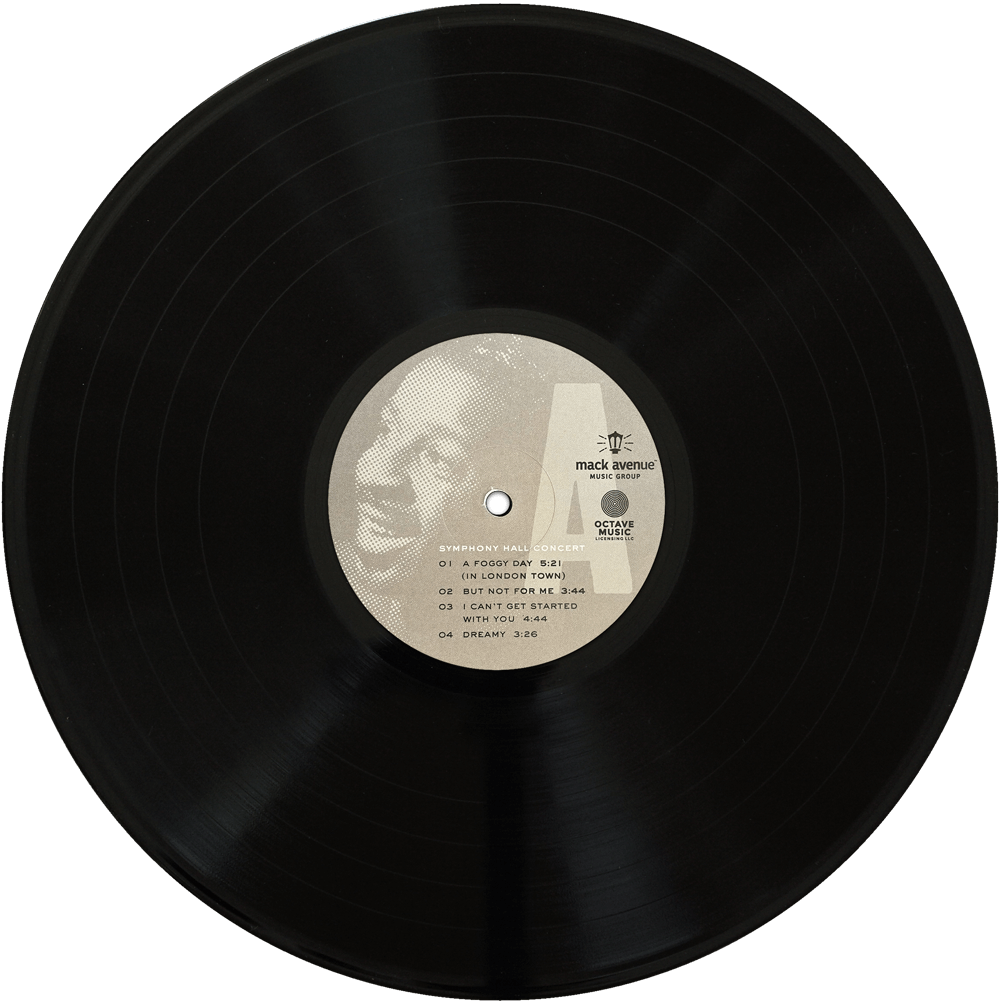
On the joyful album opener, "A Foggy Day," Garner’s mid-tempo gait is in full effect, cementing it as an involuntary foot-tapper. His staunch dedication to the blues and other culturally informative forms in the Black music lineage—stride, gospel, swing, etc.—is particularly apparent in this piece, as well as the following hard swinging version of "But Not For Me."
Something phenomenal—and characteristic of this trio—occurs on "I Can’t Get Started With You," which is to slow down in tempo, yet not in intensity. This produces a mellow, sophisticated tension without feeling too labored. Additionally, the thunderous rumble of Garner’s left hand creates a harmonic tsunami that interacts fluidly with his right hand, making it difficult to know where one hand stops and the other begins. It generates a churning of energy that allows for a flexibility in tempo. Though it is clearly all about Garner, Calhoun and Martin are not ancillary in this ensemble. They are three in body, but one in sound and spirit.
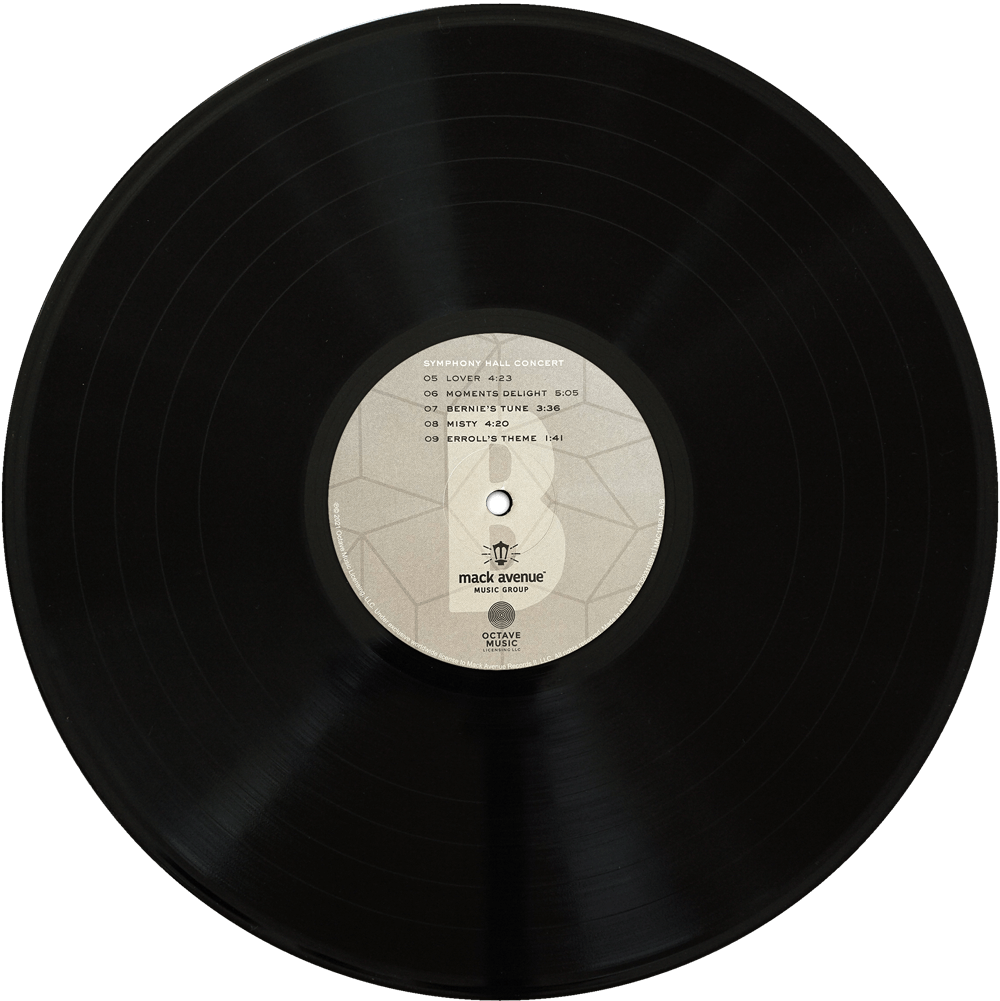
It is generally on ballads where Garner gets to display his virtuosity the most, as is the case here with his composition, "Dreamy." His contemporary introductory abstraction is briefly reminiscent of Gershwin’s "Bess, You Is My Woman Now," but quickly moves to what could have soon been described as Motown flavored, leaving me wishing that Garner had composed Broadway musicals. "Lover" is tight and bright, while "Moments Delight" is expansive and exploratory, leading us well into "Bernie’s Tune," which ventures further into bebop than any other song in the evening’s repertoire. The introduction alone brought forth shades of what was to come in the next couple of decades with heavy fifths in the left hand, something McCoy Tyner eventually popularized. McCoy first recorded with John Coltrane the following year and, in retrospect, I now grasp the influence of Erroll’s rolling trills and thunderous left hand on emerging players of the time. Garner also chose chromatic motion to replace the flat sixth for the second chord of the form—as Monk might—integrating bop and blues, while still unquestionably swinging.
Enough cannot be said about this performance of "Misty," Garner’s best-known composition, then about five years old and still resonating as fresh and exciting, not like the compulsory performance of a hit. His genius orchestration, technique, inventiveness, and especially rhythmic freedom could actually make you not want to hear this song performed by anyone else.
Rhythm is generally not thought of as absolute, making it difficult to notate elements of human pulse and time feel with true accuracy. I dare say Erroll Garner’s advanced rhythmic approach remains flatly impossible to notate, and almost impossible to replicate. The brevity of "Erroll’s Theme" was undoubtedly the best way to close the set.
With the additional knowledge I’ve gained from accessing the Garner-Glaser archives, I envision Garner being the Hip-Hop musician of his time. He formed his own record label, he was not traditionally trained, and most importantly his music reeked of soul and announced loudly that he was unapologetically Black.
History is often obscured, allowing for some of our distinguished messengers’ greatest offerings to be taken for granted. The discovery of this concert recording helps us to clearly understand that Garner’s interpretive freedom of rhythm and melody, combined with his command of the instrument, made him not only ahead of his time, but a true visionary force in modern music.
It is impossible to reflect upon Erroll Garner (or tell any other jazz story) without contextualizing his music. 1959, when this historic performance took place, marked the end of an era and offered a glimpse of what was to come—one of the most transformative decades in American history. Listening to these recordings, I’ve tried to go back in time to imagine attending this performance on a cold evening in Boston, January 17, 1959. While we have no way of truly knowing the vibe of the room other than by the audience's reaction and what can be discovered from concert reviews, one thing I am certain of is that the people in Symphony Hall did not miss the Boston Pops that evening due to Garner’s unique ability to encapsulate an entire orchestra with just two hands.
On the joyful album opener, "A Foggy Day," Garner’s mid-tempo gait is in full effect, cementing it as an involuntary foot-tapper. His staunch dedication to the blues and other culturally informative forms in the Black music lineage—stride, gospel, swing, etc.—is particularly apparent in this piece, as well as the following hard swinging version of "But Not For Me."
Something phenomenal—and characteristic of this trio—occurs on "I Can’t Get Started With You," which is to slow down in tempo, yet not in intensity. This produces a mellow, sophisticated tension without feeling too labored. Additionally, the thunderous rumble of Garner’s left hand creates a harmonic tsunami that interacts fluidly with his right hand, making it difficult to know where one hand stops and the other begins. It generates a churning of energy that allows for a flexibility in tempo. Though it is clearly all about Garner, Calhoun and Martin are not ancillary in this ensemble. They are three in body, but one in sound and spirit.
It is generally on ballads where Garner gets to display his virtuosity the most, as is the case here with his composition, "Dreamy." His contemporary introductory abstraction is briefly reminiscent of Gershwin’s "Bess, You Is My Woman Now," but quickly moves to what could have soon been described as Motown flavored, leaving me wishing that Garner had composed Broadway musicals. "Lover" is tight and bright, while "Moments Delight" is expansive and exploratory, leading us well into "Bernie’s Tune," which ventures further into bebop than any other song in the evening’s repertoire. The introduction alone brought forth shades of what was to come in the next couple of decades with heavy fifths in the left hand, something McCoy Tyner eventually popularized. McCoy first recorded with John Coltrane the following year and, in retrospect, I now grasp the influence of Erroll’s rolling trills and thunderous left hand on emerging players of the time. Garner also chose chromatic motion to replace the flat sixth for the second chord of the form—as Monk might—integrating bop and blues, while still unquestionably swinging.
Enough cannot be said about this performance of "Misty," Garner’s best-known composition, then about five years old and still resonating as fresh and exciting, not like the compulsory performance of a hit. His genius orchestration, technique, inventiveness, and especially rhythmic freedom could actually make you not want to hear this song performed by anyone else.
Rhythm is generally not thought of as absolute, making it difficult to notate elements of human pulse and time feel with true accuracy. I dare say Erroll Garner’s advanced rhythmic approach remains flatly impossible to notate, and almost impossible to replicate. The brevity of "Erroll’s Theme" was undoubtedly the best way to close the set.
With the additional knowledge I’ve gained from accessing the Garner-Glaser archives, I envision Garner being the Hip-Hop musician of his time. He formed his own record label, he was not traditionally trained, and most importantly his music reeked of soul and announced loudly that he was unapologetically Black.
History is often obscured, allowing for some of our distinguished messengers’ greatest offerings to be taken for granted. The discovery of this concert recording helps us to clearly understand that Garner’s interpretive freedom of rhythm and melody, combined with his command of the instrument, made him not only ahead of his time, but a true visionary force in modern music.