


Erroll Garner
That's My Kick
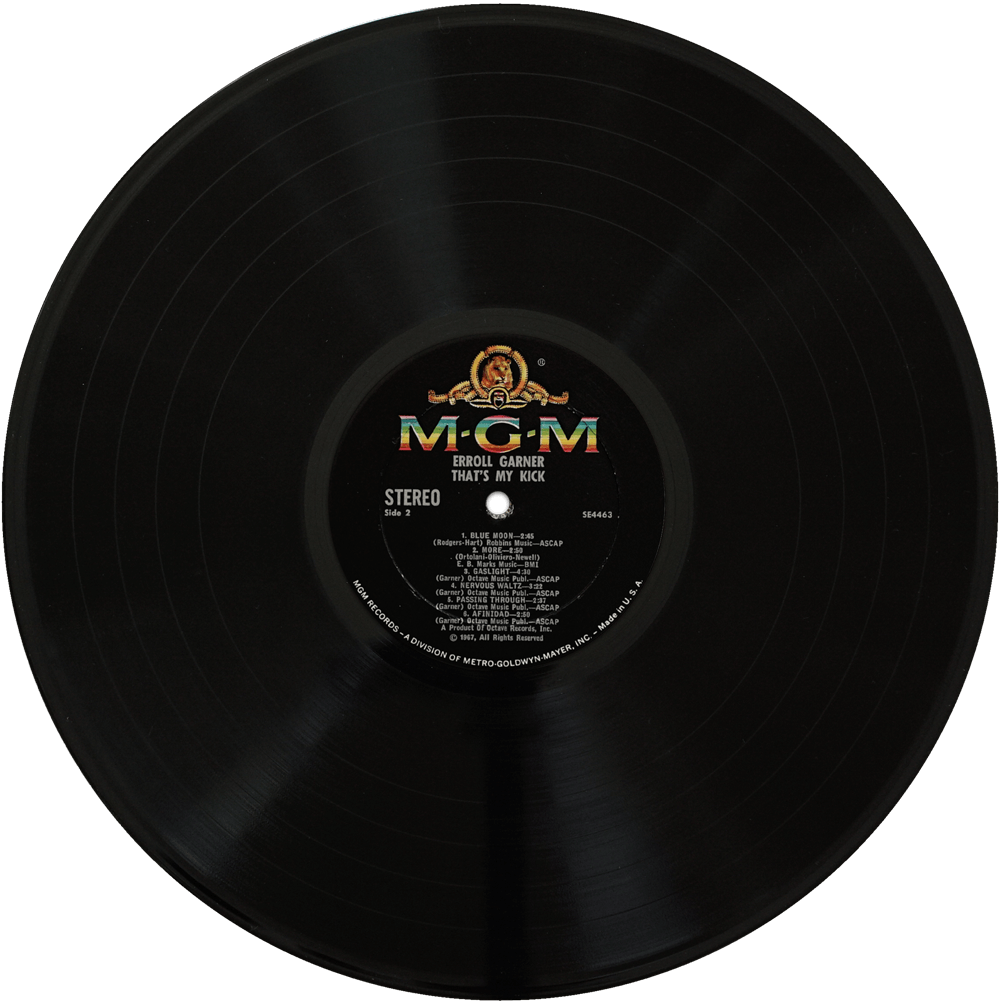
This was Garner’s first traditional studio album in five years and perhaps his most ambitious album ever as a composer. The selections were surely inspired by the new array of musicians assembled for the sessions, including percussionist Jose Mangual, who would go on to play with Garner for the rest of his career. The electric atmosphere captured on tape here is at times raucous and always palpably joyful.


Buy the Album
This is the album in its truest form. Buy once, listen deeply, and support the work behind the sound.



About the Album
Credits
Piano Erroll Garner Bass Milt Hinton Drums Herbert Lovelle (2–10), George Jenkins (1, 11, 12) Congas José Mangual (2–10), Johnny Pacheco (1, 11, 12) Guitar Wally Richardson (2–10) Art Ryerson (1, 11, 12) Recorded Apr 13 (1, 11, 12) and Nov 19 (2–10), 1966 by Bob Simpson at RCA Studios, NYC Original Album Producer Martha Glaser Cover Photo Charles Stewart Original Liner Notes Michael Zwerin Octave Remastered Series That’s My Kick Senior Producer PeterLockhart Producer Steve Rosenthal Sound Restoration Jamie Howarth, Plangent Processes; Peter Lockhart Analog Tape Transfer John K. Chester Mixing Ed McEntee, Steve Rosenthal, Peter Lockhart Mastering Michael Graves Art Direction, Design White Bicycle
Piano Erroll Garner Bass Milt Hinton Drums Herbert Lovelle (2–10), George Jenkins (1, 11, 12) Congas José Mangual (2–10), Johnny Pacheco (1, 11, 12) Guitar Wally Richardson (2–10) Art Ryerson (1, 11, 12) Recorded Apr 13 (1, 11, 12) and Nov 19 (2–10), 1966 by Bob Simpson at RCA Studios, NYC Original Album Producer Martha Glaser Cover Photo Charles Stewart Original Liner Notes Michael Zwerin Octave Remastered Series That’s My Kick Senior Producer PeterLockhart Producer Steve Rosenthal Sound Restoration Jamie Howarth, Plangent Processes; Peter Lockhart Analog Tape Transfer John K. Chester Mixing Ed McEntee, Steve Rosenthal, Peter Lockhart Mastering Michael Graves Art Direction, Design White Bicycle
Liner Notes
Actually, this isn't a recording. It's live music in your living room—and it's a ball. It romps with a lack of inhibitions and tenseness rarely captured in the up-tight and businesslike sterility of a recording studio. The feeling is one of now and close. The musicians were playing for the fun of it right then and not for some vague and unknown listener someplace and sometime else.
Immediacy and presence: Empathy and joy. The life hasn't been programmed out of the human beings here, as it so often is in our "advanced” society, in favor of that glossy God Technology, which will soon program the life out of all of us if we are not careful. It takes a man with the energy of Erroll Garner to achieve audio fidelity with humanity, not at the sacrifice of it.
Erroll is the only guy around who can sound like two different instruments playing at two different tempos at the same time, and still swing. His left hand is a guitar pushing the beat, his right a pianist lagging. They meet, somehow, and where they do is right where the rhythm section is—the right place to be. Erroll's time is here extended; extended to and meshed perfectly with the rhythm section. The bongos and the balance reflect a more important role for the accompaniment than in Erroll's past. They nest together likeovers in a haystack, five people making music together—as one.
THAT'S MY KICK, AFINIDAD, PASSING THROUGH, NERVOUS WALTZ, GASLIGHT and LIKE IT IS are all written by Garner. GASLIGHT could be another MISTY—it's certainly as pretty. And all the tunes are as musical as we have come to take for granted from Erroll. But the best thing about him is his sense of humor. It's as if he's always saying; “We are supposed to enjoy music—remember?”
KICK, MOON, and MORE open with wild, polyrhythmical solo piano introductions—avant garde—if you insist on definitions. Listen to them with the certainty that the pulse will eventually pounce on you with Erroll's sparkling, familiar and swinging strength. His time and conception are out of time. He renders historical or stylistic classification unnecessary. He is neither old-fashioned nor new-fangled, conservative nor radical, nor anything else other than Erroll Garner, which is plenty.
Herbert Lovelle plays drums, Wally Richardson, guitar, and Jose Mangual, bongos on all tracks except AFINIDAD and KICK, on which they are replaced by George Jenkins, Art Ryer son and Johnny Pacheco respectively. And Milt Hilton's bass is ubiquitous. I should mention that there is, in actuality, a sixth instrument—the Swinging-Grunt. Composer John Cage teaches us that any sound at all can be musical if treated in a musical fashion-fire-engines, bird-tweets, the wind, or a grunt. Glenn Gould has introduced his audience to the Bach-Grunt, and it is to Erroll Garner that we owe thanks for the Swinging Grunt, a strangely pertinent sound of gutteral beauty with which he accompanies himself up tempo.
Primarily, though, we owe him thanks for the happy energy his music gives to us and to that extent this record adds to his vital body of recorded works. It is the same joy, even more so.
Actually, this isn't a recording. It's live music in your living room—and it's a ball. It romps with a lack of inhibitions and tenseness rarely captured in the up-tight and businesslike sterility of a recording studio. The feeling is one of now and close. The musicians were playing for the fun of it right then and not for some vague and unknown listener someplace and sometime else.
Immediacy and presence: Empathy and joy. The life hasn't been programmed out of the human beings here, as it so often is in our "advanced” society, in favor of that glossy God Technology, which will soon program the life out of all of us if we are not careful. It takes a man with the energy of Erroll Garner to achieve audio fidelity with humanity, not at the sacrifice of it.
Erroll is the only guy around who can sound like two different instruments playing at two different tempos at the same time, and still swing. His left hand is a guitar pushing the beat, his right a pianist lagging. They meet, somehow, and where they do is right where the rhythm section is—the right place to be. Erroll's time is here extended; extended to and meshed perfectly with the rhythm section. The bongos and the balance reflect a more important role for the accompaniment than in Erroll's past. They nest together likeovers in a haystack, five people making music together—as one.
THAT'S MY KICK, AFINIDAD, PASSING THROUGH, NERVOUS WALTZ, GASLIGHT and LIKE IT IS are all written by Garner. GASLIGHT could be another MISTY—it's certainly as pretty. And all the tunes are as musical as we have come to take for granted from Erroll. But the best thing about him is his sense of humor. It's as if he's always saying; “We are supposed to enjoy music—remember?”
KICK, MOON, and MORE open with wild, polyrhythmical solo piano introductions—avant garde—if you insist on definitions. Listen to them with the certainty that the pulse will eventually pounce on you with Erroll's sparkling, familiar and swinging strength. His time and conception are out of time. He renders historical or stylistic classification unnecessary. He is neither old-fashioned nor new-fangled, conservative nor radical, nor anything else other than Erroll Garner, which is plenty.
Herbert Lovelle plays drums, Wally Richardson, guitar, and Jose Mangual, bongos on all tracks except AFINIDAD and KICK, on which they are replaced by George Jenkins, Art Ryer son and Johnny Pacheco respectively. And Milt Hilton's bass is ubiquitous. I should mention that there is, in actuality, a sixth instrument—the Swinging-Grunt. Composer John Cage teaches us that any sound at all can be musical if treated in a musical fashion-fire-engines, bird-tweets, the wind, or a grunt. Glenn Gould has introduced his audience to the Bach-Grunt, and it is to Erroll Garner that we owe thanks for the Swinging Grunt, a strangely pertinent sound of gutteral beauty with which he accompanies himself up tempo.
Primarily, though, we owe him thanks for the happy energy his music gives to us and to that extent this record adds to his vital body of recorded works. It is the same joy, even more so.
Tracklist
Companion Podcast
Guitarist and composer Miles Okazaki joins Dr. Kelley for a journey though Garner’s album That’s My Kick. They examine Garner as the musical “trickster” of myth, and Okazaki demonstrates what made Garner’s legendary left hand rhythms such an important aspect of his artistry.